SOC 2 Readiness: What Startups Actually Need

SOC 2 Readiness
Written by
Ryan Goodwill
Category
SOC 2
Date
Share this article
Why SOC 2 Comes Up So Early
Most startups don't choose to pursue SOC 2, it's mandated by a customer's procurement team. As soon as you're selling into mid-market or enterprise accounts, a SOC 2 report becomes the fastest way to answer "how do you protect our data" without a lengthy back-and-forth security questionnaire.
Type I proves your controls are designed correctly at a single point in time. Type II proves they operated effectively over a 3-12 month observation window, and is what most serious buyers ultimately want to see before signing.
The Five Trust Service Criteria
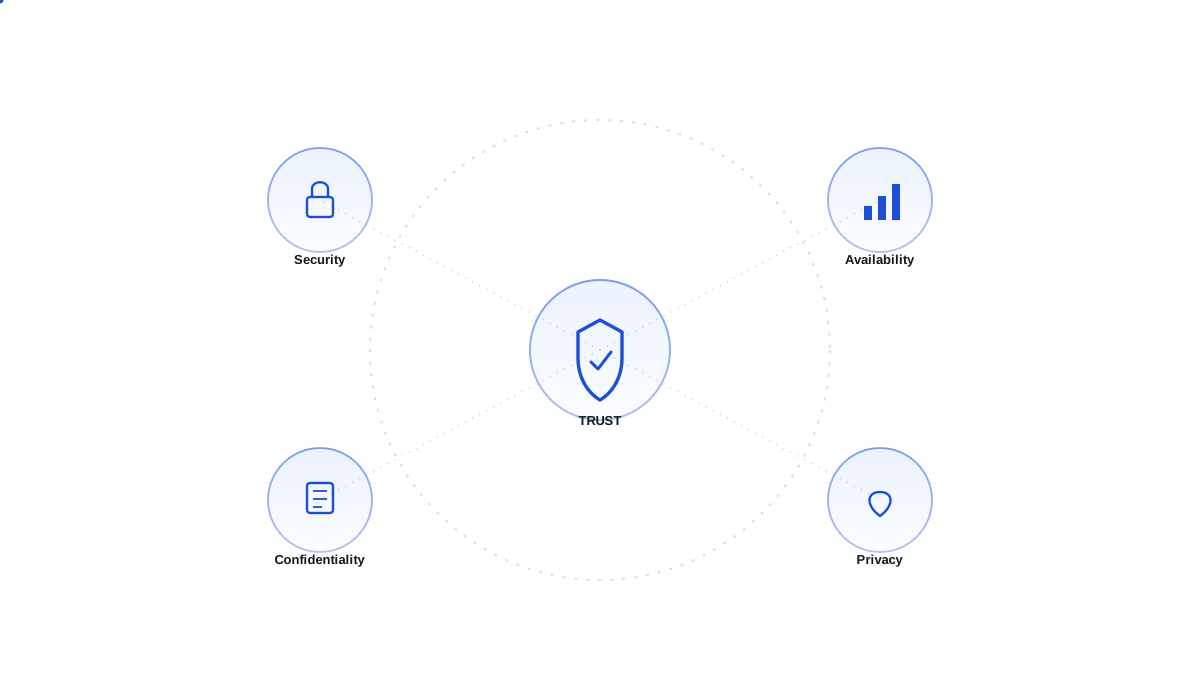
SOC 2 audits are scoped against five categories: Security, Availability, Processing Integrity, Confidentiality, and Privacy. Security is the only mandatory criterion.
For a first SOC 2, most startups scope in Security alone rather than all five, since each additional criterion adds audit time and evidence burden without necessarily changing what customers are actually asking for.
Where First-Time Founders Get Surprised
The gap isn't usually technical controls, it's process and evidence. Startups often already have access controls and encryption in place, but lack documented policies, a formal risk assessment, vendor management records, or proof that employees completed security training.
Auditors need evidence trails, not just working systems, which is why documentation catches most first-timers off guard.
A Realistic Path to Your First Report
A focused readiness program looks like this: scope Security only, run a gap assessment against your existing stack, remediate policy and evidence gaps in parallel, then move into either a Type I snapshot audit or straight into a Type II observation window if your buyer can wait.
Most startups can reach Type I in 6-8 weeks when the gaps are tackled in parallel rather than sequentially.
Share Blog