HIPAA Compliance: How to Protect Health Data at Scale

HIPAA at Scale
Written by
David Bradshaw
Category
HIPAA
Date
Share this article
Privacy Rule vs. Security Rule
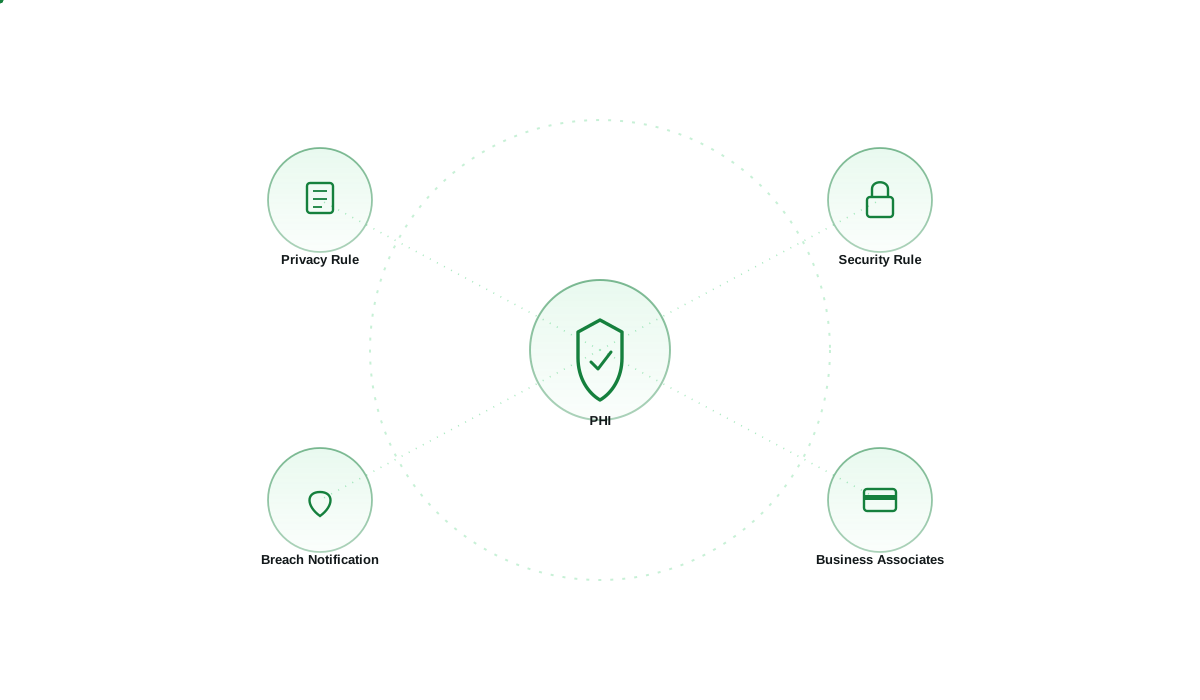
HIPAA compliance rests on two distinct rules that are often confused. The Privacy Rule governs how Protected Health Information can be used and disclosed.
The Security Rule specifically covers safeguards for electronic PHI, administrative, physical, and technical controls that protect it from unauthorized access.
Where Scale Creates New Risk
As you add more integrations, more employees, and more vendors, your PHI footprint expands in ways that are easy to lose track of.
Every new SaaS tool, analytics platform, or subcontractor that touches PHI needs a signed Business Associate Agreement (BAA) before any data is shared, and each one expands your breach exposure.
What Counts as a Reportable Breach
Not every security incident is a reportable breach. HIPAA defines it as unauthorized acquisition, access, use, or disclosure of unsecured PHI that compromises its security or privacy, unless a documented risk assessment shows a low probability of compromise.
Encryption, while technically 'addressable' rather than mandatory, is what most often keeps an incident from becoming a reportable breach.
Building a Program That Scales With You
The organizations that stay compliant as they grow treat HIPAA as a continuous risk assessment cycle, not an annual checkbox.
That means reassessing your PHI data flow whenever you add a new system, maintaining a current BAA inventory, and keeping breach response procedures tested and current rather than filed away.
Share Blog