ISO 27001 Readiness: From Gaps to Certification

ISO 27001 Certification
Written by
Ryan Goodwill
Category
ISO 27001
Date
Share this article
What ISO 27001 Actually Certifies
ISO 27001 certifies that your organization operates a functioning Information Security Management System (ISMS), a continuous cycle of identifying risks, implementing controls, and reviewing effectiveness.
It isn't a one-time technical audit. Certification bodies want to see the management system operating over time, not just controls that exist on paper, which is why the audit revisits your organization annually even after initial certification.
Risk Assessment Comes Before Controls
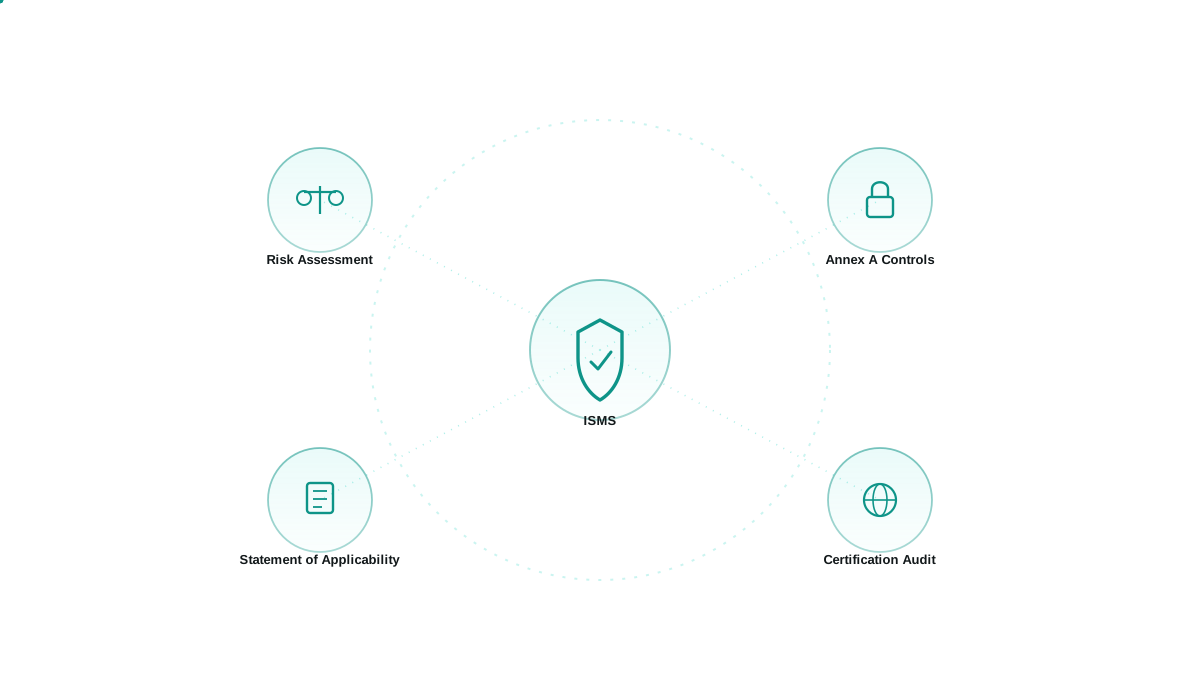
Everything in ISO 27001 traces back to your risk assessment. You identify information assets, assess the risks to their confidentiality, integrity, and availability, and then select controls from Annex A that address those specific risks, documenting your reasoning in a Statement of Applicability.
Skipping straight to implementing generic controls is the most common reason certification timelines slip.
Closing the Gap Between Policy and Practice
Many organizations already have informal versions of ISO 27001 controls in place, but lack the documentation, ownership, and review cadence an auditor needs to see.
Common gaps include missing management review meetings, incomplete internal audit records, and controls that exist but were never formally risk-assessed or tied back to the ISMS.
The Path to Certification
A realistic sequence: run the risk assessment, build your Statement of Applicability, implement and document the prioritized controls, complete at least one internal audit and management review cycle, then bring in your certification body for the Stage 1 and Stage 2 audits.
Most first-time certifications take 3-6 months depending on how much of the ISMS already exists informally.
Share Blog