PCI DSS Compliance: Your Roadmap to Payment Security

PCI DSS Roadmap
Written by
David Bradshaw
Category
PCI DSS
Date
Share this article
Why PCI DSS Scope Is the First Question
Before anything else, PCI DSS compliance comes down to one question: where does cardholder data touch your environment?
Your merchant level, based on annual transaction volume, determines whether you self-certify with a Self-Assessment Questionnaire (SAQ) or need a full Report on Compliance (ROC) from a Qualified Security Assessor (QSA).
The Six Control Objectives
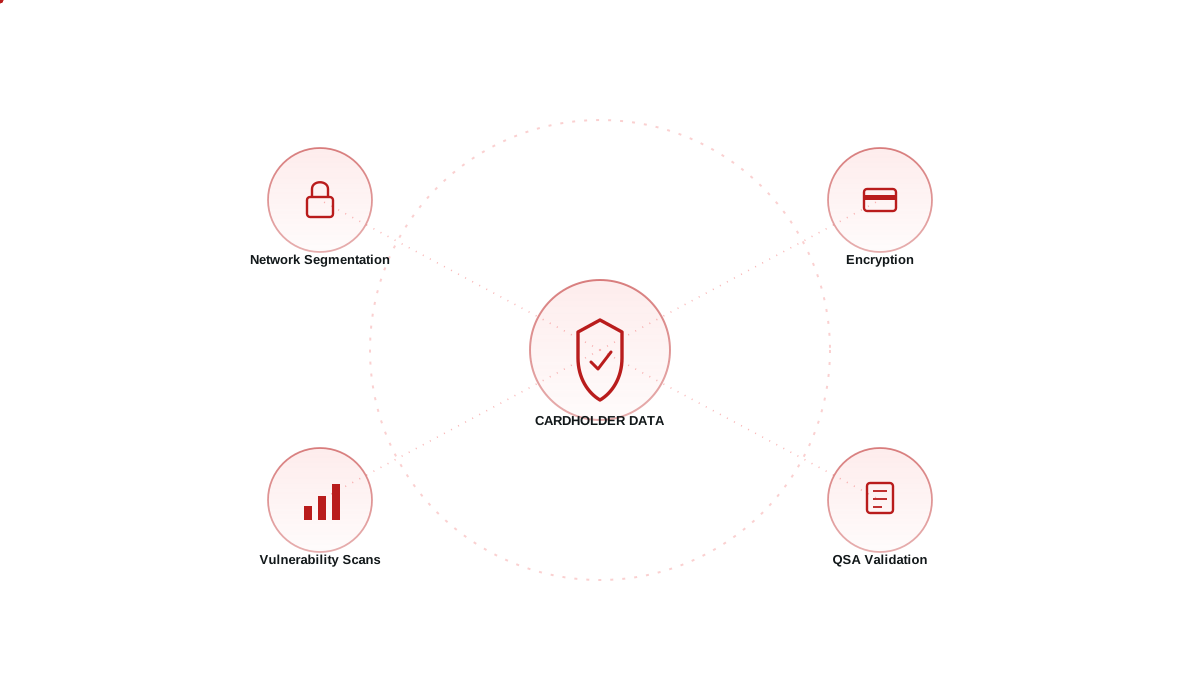
PCI DSS organizes its requirements into six objectives: build and maintain secure networks, protect cardholder data, maintain a vulnerability management program, implement strong access control, regularly monitor and test networks, and maintain an information security policy.
Together these translate into roughly 300+ individual testing procedures depending on your SAQ type.
Reducing Scope Is Usually Smarter Than Expanding Controls
The fastest way to shrink your compliance burden isn't adding more controls, it's reducing scope.
Outsourcing card storage to a PCI-validated payment processor or using tokenization can remove entire systems from your cardholder data environment, often cutting assessment time and cost significantly.
Staying Compliant Year-Round
PCI DSS isn't a once-a-year event. Requirements include quarterly vulnerability scans from an Approved Scanning Vendor, regular penetration testing, and continuous monitoring of access to cardholder data.
Building these into a recurring calendar, rather than scrambling before your annual assessment, is what actually keeps merchants compliant.
Share Blog